The advertising companion to your BFCM readiness plan
Black Friday and Cyber Monday combine operational readiness with advertising decisions. Inventory, promotions, and eligibility determine what you can sell; campaign pacing determines how you invest in reaching shoppers. This guide focuses on the advertising operating plan rather than repeating the broader readiness checklist.
Amazon’s 2026 holiday advertising guide describes a build, peak, and extend approach. Use that structure to prepare before the busiest shopping period and evaluate what happens afterward. Exact promotional schedules, submission deadlines, fees, and available advertising features vary by marketplace and account; confirm them in the current Amazon guidance and your account before committing spend.
Choose products before choosing the advertising budget
Start with eligible products that have a clear offer, accurate detail pages, available inventory, and a contribution model the team understands. Review expected delivery and the Featured Offer where relevant. A higher budget on an unavailable or uncompetitive product is not an event strategy.
Calculate contribution using the actual promotional selling price. Include product costs, selling and fulfillment fees, applicable promotion costs, and a realistic returns allowance. A discount can improve conversion while reducing the contribution available to pay for each order. Use scenarios rather than assuming that every increase in sales is valuable.
- Identify which ASINs can sustain demand without exhausting critical stock.
- Confirm the approved offer and current promotion eligibility in the account.
- Separate established products from launches that need a learning budget.
- Document any acquisition objective that intentionally differs from immediate profit.
Plan build, peak, and extend phases
Treat the following as an operating framework, not Amazon’s official deal calendar. During build, validate targeting and product messaging, check applicable creative approval requirements, and collect a baseline. During peak, monitor spend alongside conversion and stock. During extend, remove event-specific assumptions and review which activity still fits December demand.
Avoid a full campaign rebuild immediately before peak traffic unless the account has a serious structural problem. Keep useful history and make event activity identifiable through consistent naming and reporting. Campaign formats and audience options depend on eligibility; use only the controls available to your account.
| Phase | Advertising priority | Decision gate |
|---|---|---|
| Build | Validate products, creative, targeting and baseline | Are the offer and campaign ready? |
| Peak | Pace approved spend against demand and stock | Does additional investment still fit the objective? |
| Extend | Reset event settings and review remaining demand | Which campaigns deserve continued support? |
Set budget guardrails instead of a universal multiplier
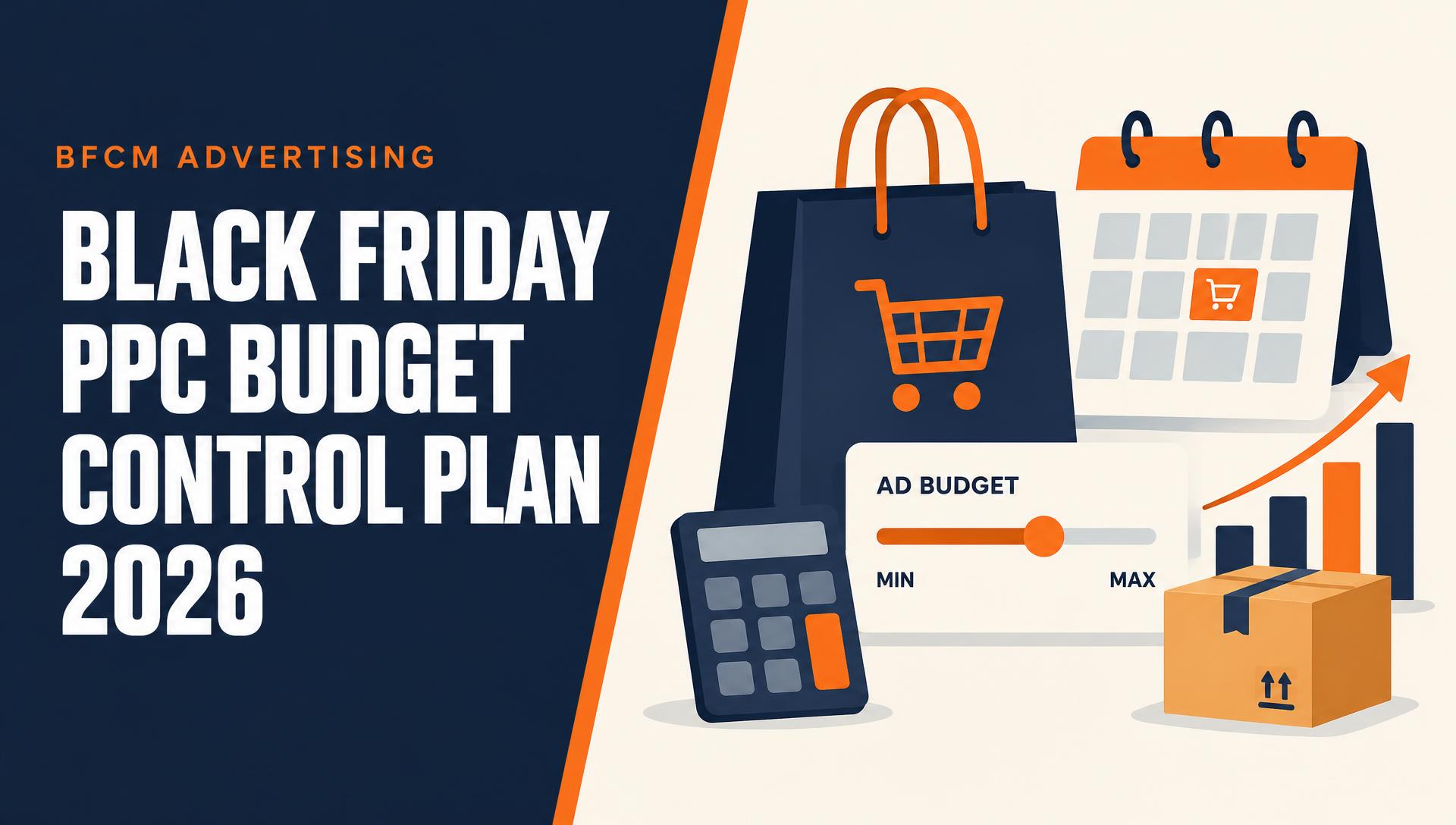
There is no reliable rule that every brand should double or quadruple its daily PPC budget for BFCM. Establish a total event allowance, allocate it by campaign role, and define who can approve changes. Keep a reserve for verified opportunities rather than committing all spend before demand is observed.
Separate branded demand, relevant category acquisition, and exploratory targeting when evaluating performance. A campaign that captures existing brand demand should not be reported as if it proves new-customer acquisition. Compare incremental spend with the additional orders and contribution it appears to support, acknowledging attribution limitations.
A daily budget is a campaign control, not a guarantee of smooth hourly delivery. Check the current budget rules and billing behavior for the campaign type you use. If stricter internal spending limits are required, plan monitoring and approvals around those documented controls instead of assuming spend will be evenly distributed.
| Guardrail | Define before launch | Review during the event |
|---|---|---|
| Spend allowance | Approved event spend and reserve owner | Actual spend versus plan |
| Product economics | Contribution at the promotional price | Cost and conversion changes |
| Inventory | Available units and replenishment constraints | Sell-through and purchase availability |
| Escalation | Who approves a bid or budget change | Documented reason and next review |
Use an event monitoring sheet for faster decisions
Keep one shared record of spend, traffic, attributed orders, offer status, stock, and changes. The monitoring frequency should reflect account scale and risk, with someone assigned to act on urgent issues. A report without an owner will not prevent a campaign from spending into a problem.
Do not overreact to a few recent clicks or same-day attribution that is still incomplete. Use immediate signals for availability and delivery issues, and mature reporting for performance decisions. Amazon’s optimization guidance highlights targeting, product pages, bids, and budget pacing; investigate these separately rather than interpreting every dip as a need to spend more.
| Signal | Check first | Possible response |
|---|---|---|
| Campaign becomes budget constrained | Mature performance, stock and allowance | Approve a controlled increase or reallocation |
| Clicks rise but conversion weakens | Offer, detail page, intent and reporting maturity | Resolve the cause before expanding |
| Inventory approaches an internal risk limit | Availability and replenishment confidence | Reduce exposure or move spend to a suitable product |
| Promotion stops or changes | Current eligibility and effective selling price | Recalculate economics and review event creative |
Keep creative and landing pages aligned with the offer
Where your campaign supports creative assets, make the product and offer understandable without unsupported urgency or unverifiable savings claims. Check ad policies and approval status early. Ensure the destination reflects the live offer and that expired event messaging is removed when the promotion ends.
Use relevant destinations rather than sending every campaign to the same page. A comparison-focused shopper may need a useful product comparison; a shopper with a specific product query needs the correct detail page. Good campaign alignment cannot compensate for missing or inaccurate product information.
Measure the event without turning sales into a ranking claim
After peak demand, restore appropriate non-event budgets, bids, and messaging, checking each change rather than applying a blanket reset. Allow reporting to mature, then compare results against the baseline with promotions, pricing, and stock changes visible. Report total sales, advertising sales, spend, orders, and contribution context together.
Do not label all event sales incremental or claim that a high-spend week guarantees organic ranking gains. Paid attribution, total sales, and organic product visibility are related but distinct measurements. Retain useful search-term and creative learnings for later testing, with the event conditions noted.
For wider operational planning, keep the main BFCM readiness playbook as your starting point and verify all current dates and requirements in your account. For campaign execution, Xrowlix’s Amazon PPC service page explains the management scope; an account-specific discussion can establish appropriate priorities and guardrails.