1. What review velocity means
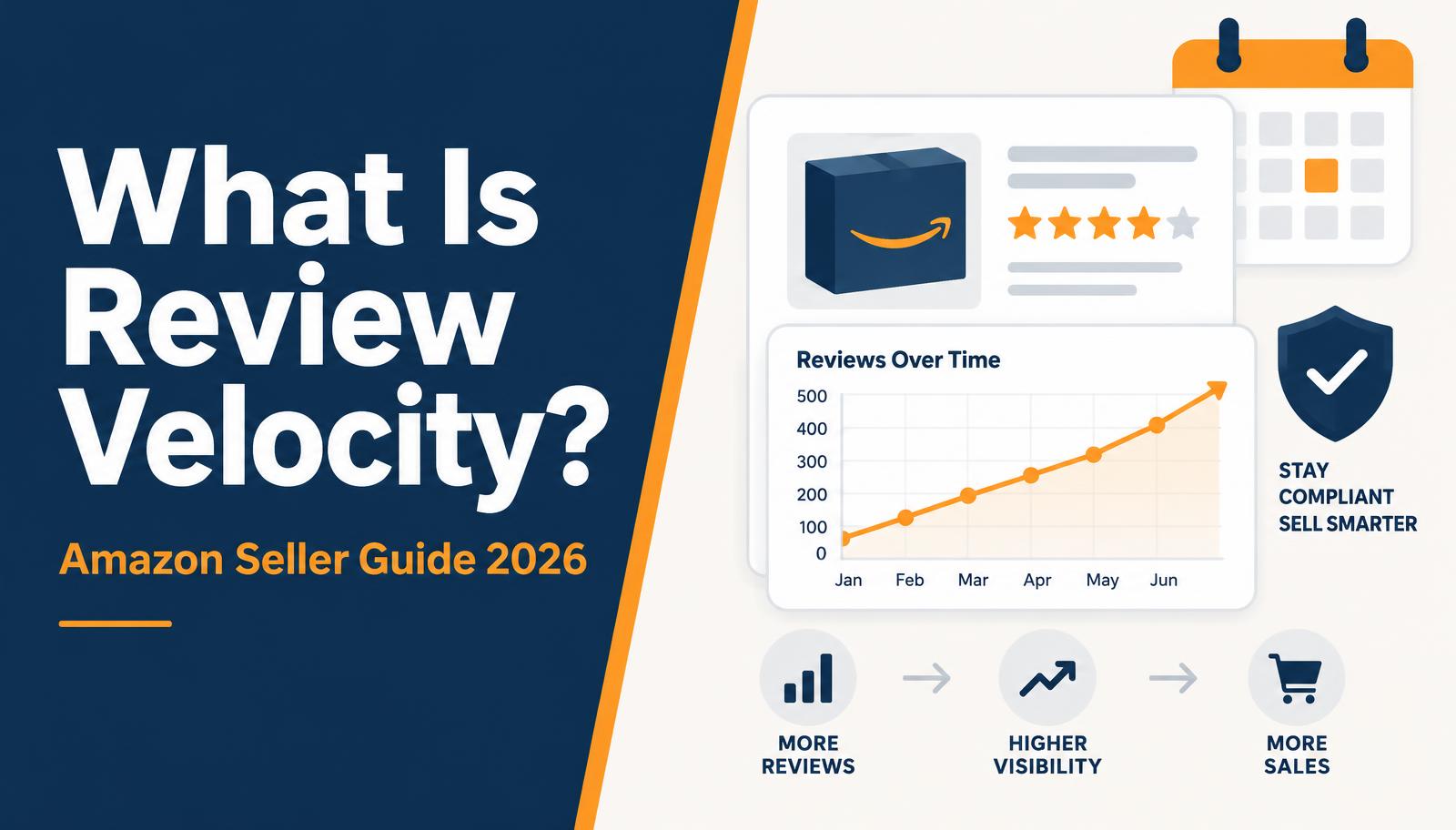
Review velocity describes how quickly a product accumulates new reviews, not how many it has in total. A listing with 2,000 reviews that has received three in the last quarter has a low velocity; a newer listing earning twenty reviews a month has a higher one. The term is used by sellers and agencies; it is not an Amazon metric with an official definition.
Velocity matters because shoppers read recency. A steady stream of recent reviews shows that people are still buying and that the current version of the product matches its description. A long gap, or a sudden spike, raises questions that a total count alone does not answer.
2. How to calculate it from your own data
Pick a fixed window, usually 30 days, and count new reviews received in it. Divide by the number of days for a daily rate, or report the monthly count directly. Then compare it with units ordered in the same window to get a review rate (reviews per 100 units). The review rate tells you more than velocity alone, because velocity naturally rises and falls with sales.
Track ratings and written reviews separately if your reporting allows, and note the average star rating of new reviews in the window. A rising velocity with a falling recent rating is a product or listing problem, not a success.
| Metric | Formula | What it tells you |
|---|---|---|
| Review velocity | New reviews ÷ days in window | How fast fresh evidence appears |
| Review rate | New reviews ÷ units ordered × 100 | Whether buyers are leaving feedback at a normal rate |
| Recent rating | Average stars of reviews in window | Whether current buyers are satisfied |
| Gap | Days since last review | Whether the listing looks stale to shoppers |
3. What review velocity does and does not influence
Reviews are conversion evidence. When recent reviews answer common questions, shoppers hesitate less, and conversion rate can improve. Conversion and sales are signals Amazon’s search is widely understood to consider, so velocity can matter indirectly. Amazon does not publish its ranking formula, and no reliable source confirms review velocity as a direct ranking factor.
Velocity also does not fix weak fundamentals. A poor main image, an unclear title, an uncompetitive price, or stock-outs will limit sales regardless of reviews. Fix the listing first; reviews then amplify a page that already converts.
4. Is there a “good” review velocity?
There is no universal benchmark. Review rates vary by category, price point, and how much a product invites an opinion. A low-cost consumable may get proportionally fewer reviews than a gadget customers want to talk about. The useful benchmark is your own history and the recency shown on competing listings for the same search terms.
Check the top competitors for your main keyword: when did they last receive reviews, and roughly how often? If their newest reviews are days old and yours are months old, you have a recency gap worth closing through compliant means.
5. Compliant ways to improve review velocity
Amazon’s policies prohibit offering compensation, refunds, free products, or discounts in exchange for reviews, asking only happy customers to review, and having friends, family, or employees review your products. The levers below stay within those rules.
- Use the Request a Review button in Seller Central, or a compliant automated equivalent, for eligible orders.
- Enroll eligible new products in Amazon Vine once the listing is final, and expect honest, sometimes critical feedback.
- Include a neutral product insert that asks for feedback without incentives or conditions.
- Fix the causes of negative reviews: unclear instructions, sizing, packaging damage, or missing information on the detail page.
- Keep inventory in stock so sales, and therefore reviews, are not interrupted.
- Support sales with well-structured advertising so more qualified buyers reach the listing.
6. Tactics to avoid
Shortcuts that inflate velocity carry account-health risk that outweighs any conversion gain. Amazon may remove reviews, restrict review features on a listing, or take action on a selling account when it finds review abuse.
- Paying review services or joining review-exchange groups.
- Refunding or rebating buyers in return for a review.
- Review gating: asking for reviews only from customers who report a good experience.
- Merging unrelated products into a variation family to borrow another product’s reviews.
7. A simple monthly review routine
Once a month, record velocity, review rate, recent rating, and days since last review for each key ASIN. Read the new critical reviews and tag the cause: product, listing information, delivery, or expectation mismatch. Assign one fix per recurring cause and check whether the next month’s recent rating and review rate change. This keeps review work tied to product and listing improvements rather than to volume for its own sake.