The three pricing models you will be quoted
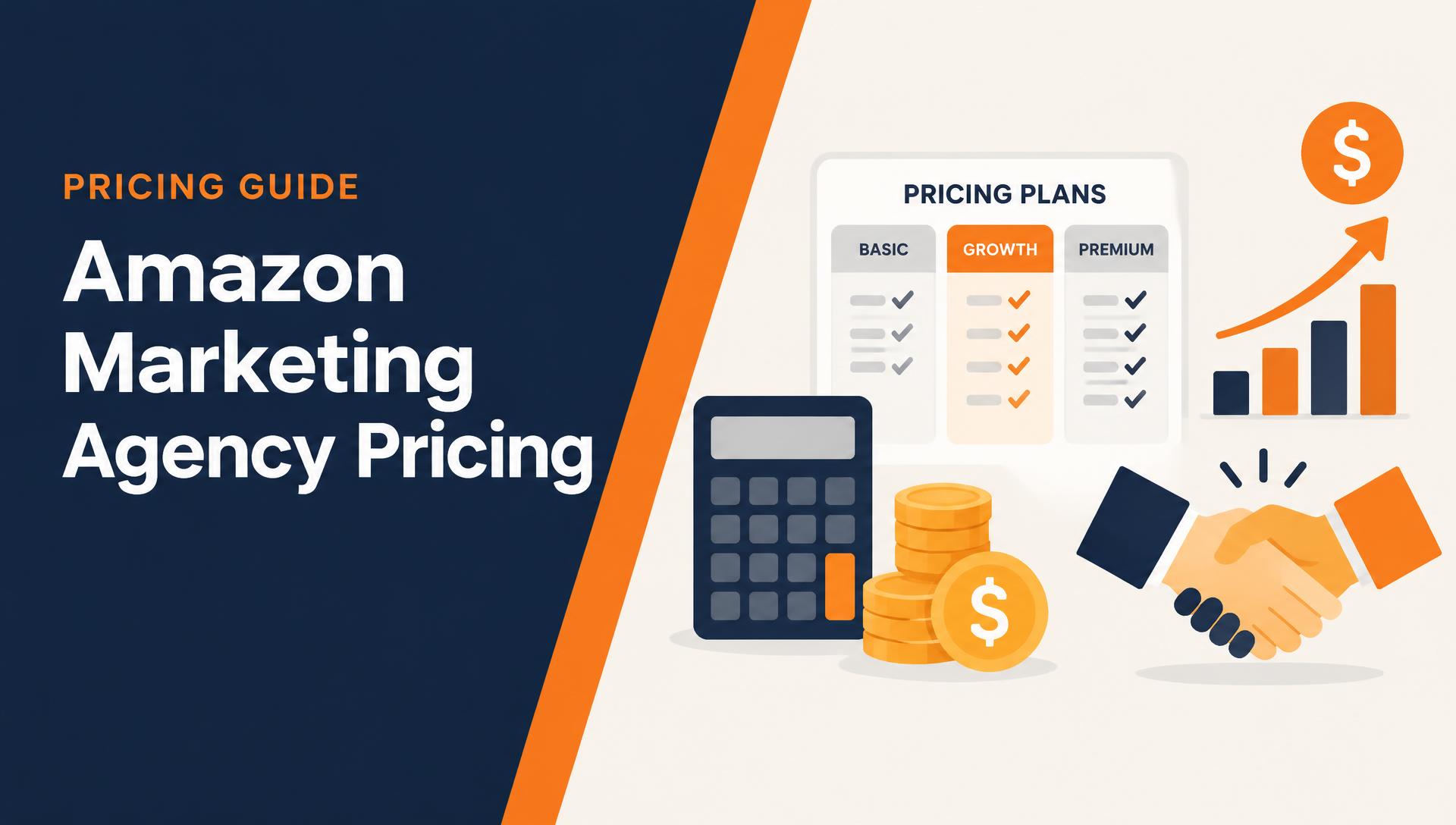
Almost every Amazon marketing agency proposal reduces to one of three structures. A flat monthly retainer charges a fixed fee for a defined scope: campaign management, listing optimization, reporting, or a combination. A percentage-of-spend model charges a share of the ad budget the agency manages, which scales the fee as your advertising grows. A hybrid combines a smaller base retainer with a lower percentage, which balances risk between both sides.
None of these is inherently better. The right model depends on how predictable your spend is and how much of the account the agency owns. What matters is that the scope behind the number is written down: which services, how many ASINs, how many marketplaces, and what reporting cadence.
| Model | How it works | Best for | Watch out for |
|---|---|---|---|
| Flat retainer | Fixed monthly fee for a defined scope | Stable catalogs and predictable workloads | Scope creep: extras billed separately |
| Percentage of ad spend | Fee scales with managed ad budget | Brands scaling spend quickly | Incentive to grow spend, not profit |
| Hybrid | Lower base fee plus smaller percentage | Most growing brands | Complex terms; get the math in writing |
What actually drives the price up or down
Two agencies quoting for the same brand can land far apart because the underlying variables differ. Catalog size is the biggest one: managing 5 ASINs is a different job from managing 200. Marketplace count matters too, because each region adds campaigns, keyword research, and compliance work. Ad spend level affects both the workload and the percentage-based fee.
Service breadth is the other major driver. An agency managing only Sponsored Products will quote less than one covering Sponsored Brands, Sponsored Display, DSP, listing content, A+ Content, and account health. Compare quotes only after you have normalized the scope; otherwise you are comparing different products.
- Catalog size: number of ASINs and variations under management
- Marketplaces: each region adds campaigns, keywords, and compliance
- Ad spend level: higher spend means more campaigns, bids, and analysis
- Service breadth: ads only versus ads plus SEO, content, and account health
- Reporting depth: weekly dashboards cost more than monthly summaries
Realistic budget scenarios by seller stage
Rather than chasing a universal number, budget by stage. An early-stage seller with a small catalog usually needs a focused engagement: PPC management plus listing fixes, with a modest retainer. A growing brand adding marketplaces needs a broader scope and should expect the fee to reflect that. An established brand with significant ad spend is typically negotiating hybrid terms where the percentage component dominates.
In every scenario, the discipline is the same: define the monthly total you can sustain for at least three to six months, because agency work compounds. Switching agencies every six weeks resets learning and usually costs more than the fee difference between candidates.
| Seller stage | Typical scope | Budgeting approach |
|---|---|---|
| Early stage | PPC management plus listing optimization | Modest flat retainer; prioritize fixing listings before scaling ads |
| Growing brand | Ads, SEO, content, expansion support | Hybrid model; tie growth in fee to growth in scope |
| Established brand | Full service across marketplaces and ad products | Negotiated hybrid; audit deliverables quarterly |
How to judge whether the fee pays for itself
The right comparison is not fee versus revenue; it is fee versus the profit the agency protects or creates. If an agency reduces wasted ad spend, improves conversion on existing traffic, and prevents account health disruptions, the value shows up in contribution margin, not just top-line sales.
Set the measurement before the engagement starts: agree on a baseline for ACoS, TACoS, conversion rate, and organic rank on priority keywords, then review against that baseline monthly. An agency that resists written baselines is telling you something about how it expects to be evaluated.
Negotiating scope instead of just price
The most effective negotiation is rarely about the headline number. It is about what the number includes. Ask for the deliverable list, the reporting cadence, the named people on your account, and the exit terms. Then adjust scope to fit budget: fewer marketplaces in month one, a phased rollout of services, or a shorter initial term with a review checkpoint.
A good agency will work with you on structure because a well-scoped engagement is easier to deliver profitably. An agency that refuses to itemize scope is one you should price as a risk, not a partner.