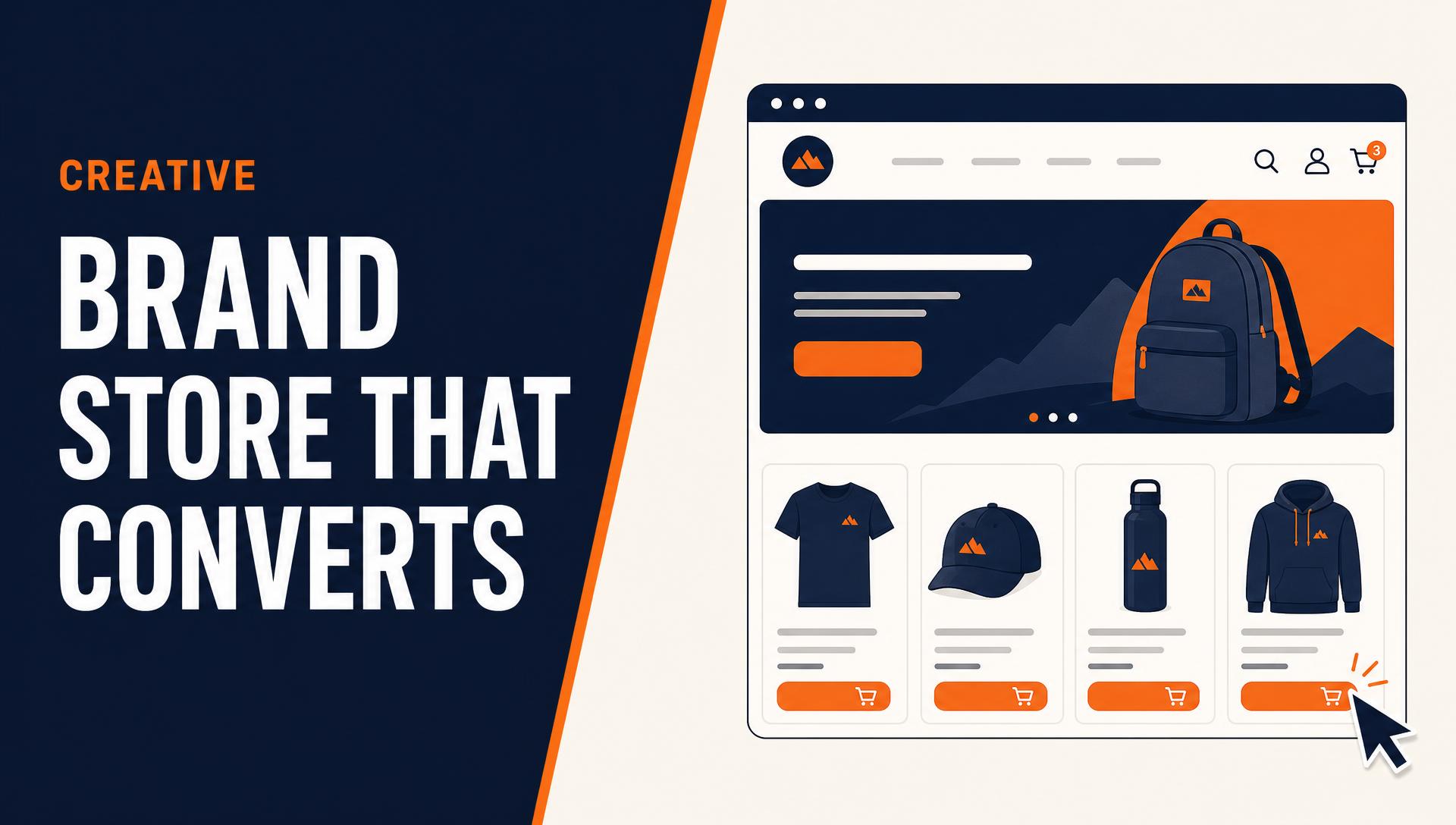
Why most Brand Stores underperform
The default Brand Store mirrors the internal catalog: a homepage, then one page per product category, each a grid of every ASIN in that family. It is easy to build and it matches how the brand thinks, which is exactly the problem. Shoppers do not arrive thinking in SKU families, they arrive with a problem to solve.
The second failure is treating the Store as a brand showcase with no purchase path. Beautiful lifestyle photography with no shoppable module and no clear next step gives a shopper nothing to do except leave.
Page architecture that follows buying decisions
Build the sub-page structure around the questions shoppers actually ask before they buy. For a supplement brand that might be goal-based pages. For a home goods brand it might be room-based. For a tools brand it might be job-based. The test is whether a shopper can find their page from the navigation bar without reading every label.
Keep depth to two levels. Anything three clicks deep collects almost no traffic, which makes the effort of building it hard to justify.
- Homepage: brand promise, hero proof, and clear routes into two or three priority sub-pages
- Sub-pages: one per buying decision, each with a shoppable module above the fold
- Best sellers or bundles page: captures shoppers who want the default answer
- New arrivals or seasonal page: the page you refresh on a schedule
Shoppable modules and the add-to-cart path
Shoppable image modules let a shopper add a product to cart directly from a lifestyle image, which removes the detour to a detail page and back. Every sub-page should have one within the first screen. A page that requires scrolling before a shopper can act loses most of its traffic to the scroll.
Pair each module with short, specific copy. Amazon Store copy has less room than a listing, so lead with the differentiator a shopper is comparing on, not a generic brand line.
Traffic quality decides Store performance
A Store with no dedicated traffic strategy is measured on whatever accidental traffic finds it. Sponsored Brands ads that route into a relevant sub-page rather than the homepage consistently outperform, because the shopper lands where their intent already is.
Store Spotlight ads exist specifically for this: they surface up to three sub-pages in one placement and let shoppers self-select. External traffic through the Amazon Attribution program gives you measurable off-Amazon routing, and it lets social and email traffic land somewhere brand-controlled rather than on a competitor-surrounded detail page.
Reading Store Insights without fooling yourself
Store Insights reports visitors, views, sales, and units per page. The number that matters most is not total visits but sales per visitor by page, because it tells you which sub-page is carrying the Store and which is decoration.
Compare pages against each other rather than against an external benchmark. A page that gets heavy traffic and weak sales per visitor is usually mismatched to the ads pointing at it, and the fix is often the ad routing rather than the page.
- Sales per visitor by page shows which sub-pages earn their place
- High traffic with weak sales usually means ad routing mismatch, not bad design
- Dwell time on a page with no shoppable module is a warning, not a win
Refresh cadence
Treat the Store like a landing page. A quarterly refresh of hero creative and seasonal pages, plus a same-week update whenever a new hero product launches, keeps the asset from drifting out of date while the ads keep pointing at it.
The most common maintenance failure is a seasonal hero banner left live for months after the season ends, which quietly signals to every shopper that nobody is looking after the brand.