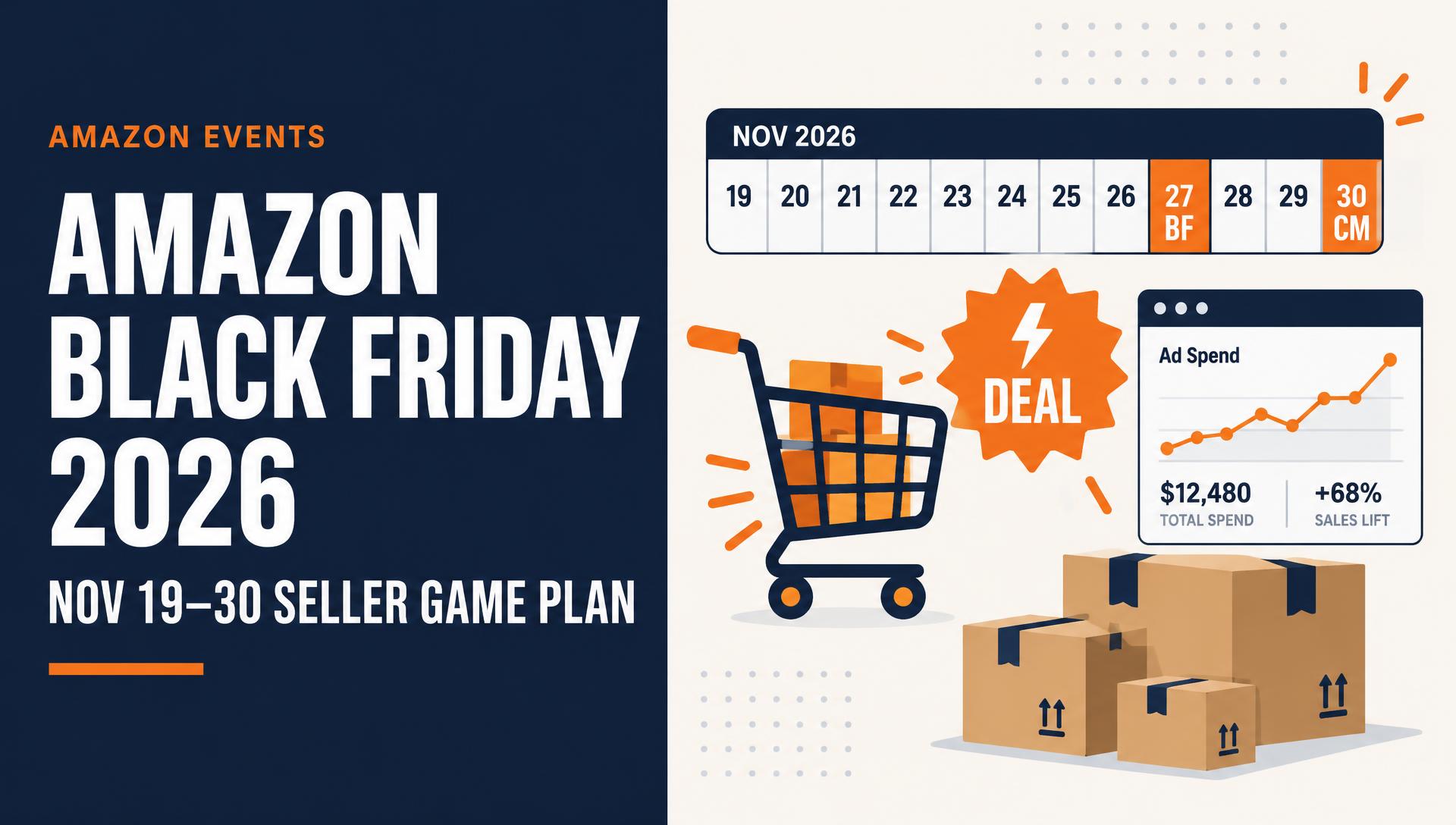
1. Amazon Black Friday 2026 dates at a glance
Amazon announced on November 9, 2026 that its Black Friday Week and Cyber Monday deal events return from November 19 to 30. That is 12 days of deals, starting eight days before Black Friday. Here is the calendar sellers should plan around.
| Date | Day | What happens |
|---|---|---|
| November 19 | Thursday | Black Friday Week starts in the US and Amazon's European stores |
| November 19–26 | Thu–Thu | Daily themed deal drops across toys, tech, fashion, beauty, premium gifts and stocking stuffers |
| November 26 | Thursday | US Thanksgiving |
| November 27 | Friday | Black Friday: Today's Big Deals drop at midnight and 8 a.m. PT |
| November 28–29 | Sat–Sun | Weekend between the two peak days |
| November 30 | Monday | Cyber Monday: second double drop; the event ends |
2. Is Amazon Black Friday the same in every country?
Amazon's European announcement on November 13 confirmed the same November 19 to 30 window across its European stores: Germany, the UK, France, Italy, Spain, the Netherlands, Belgium, Sweden, Poland and Ireland, as well as Austria, Luxembourg and Portugal. Amazon Australia's sale runs November 17 to 30. The announcements we reviewed did not list Canada, so check Amazon.ca and Seller Central for Canadian dates.
| Marketplace | 2026 Black Friday sale window | Source |
|---|---|---|
| United States | November 19–30 | Amazon Press Center |
| United Kingdom and EU stores listed above | November 19–30 | About Amazon EU |
| Australia | November 17–30 (AEDT) | About Amazon Australia |
| Canada | Confirm on Amazon.ca | Not covered in the announcements reviewed |
3. What is new in Amazon's 2026 Black Friday event
- Double drops: for the first time, Today's Big Deals with savings of up to 60% drop twice on both Black Friday and Cyber Monday, at midnight and 8 a.m. PT.
- Daily themes: Amazon is running themed deal drops each day of the event, with category days for premium gifts and stocking stuffers.
- AI shopping tools: Amazon is promoting Alexa for Shopping, which can track deals, show price history and set alerts. Shoppers can see whether your 'deal' is really lower than recent prices.
- Live sports shopping: a 'Shop the Game' feature on Prime Video lets viewers shop during live NFL, NBA, NCAA and golf broadcasts.
- More Amazon Exclusives in the Holiday Shop than in previous years, according to Amazon.
4. Is it too late to add a Black Friday deal?
For most sellers, yes for event-badged deals. Amazon closes scheduling for featured event deals weeks ahead, and the exact cutoffs are shown in the Deals dashboard in Seller Central. Do not assume a late deal will be approved in time.
What you can still control is everything around the deal: in-stock inventory, accurate prices, strong listings, advertising budgets and the margin on every order. Other promotion types, such as coupons and Prime exclusive discounts, have their own eligibility rules and lead times; check the current requirements in your account before relying on them, and calculate the margin first.
5. The day-by-day seller game plan
Use this as an operating plan, not an Amazon rule book. Adjust it to your categories, stock position and margin.
| When | Focus | Actions |
|---|---|---|
| Nov 15–18 | Prepare | Confirm stock and inbound shipments, check deal status, fix suppressed listings, refresh main images and titles, set budget caps |
| Nov 19–22 | Early week | Watch conversion and ad spend daily, defend branded search, raise budgets only on campaigns that convert at a healthy margin |
| Nov 23–26 | Build | Check stock cover for the peak days, prepare Sponsored Brands for gift searches, pause wasted search terms |
| Nov 27 | Black Friday | Check budgets before midnight and 8 a.m. PT drops, monitor stock hourly on top products, avoid running out of budget by early afternoon |
| Nov 28–29 | Weekend | Shift budget to products still in stock, keep branded campaigns on, review search term reports |
| Nov 30 | Cyber Monday | Repeat the Black Friday checks, then plan what to switch off after midnight |
| Dec 1–7 | Extend | Remove event pricing and settings, keep gift-intent campaigns running while delivery promises allow, record lessons |
6. Advertising during a 12-day event
A 12-day sale spreads demand, so the main risk is spending heavily early and having little budget left for Black Friday and Cyber Monday. Set daily budget guardrails per campaign, check them before each deal drop, and use placement and search term reports to move spend toward what is converting at a profit.
Branded search matters more during events because competitors bid on your brand name when shoppers are comparing deals. Keep branded Sponsored Products and Sponsored Brands campaigns funded across the whole window.
7. Inventory, fulfillment and peak fees
- Stock is the hard limit. A product that goes out of stock on Black Friday loses sales, ad momentum and possibly ranking. Know your stock cover in days for each top product.
- Holiday peak fulfillment fees apply to FBA through January 14, 2027. Use them in your margin maths.
- If you fulfill website or social orders through Multichannel Fulfillment, the US peak rate card applies from October 15, 2026 to January 14, 2027, plus a 3.5% fuel and logistics surcharge.
- If website and Amazon orders share inventory, set a reserve for Amazon so an off-Amazon promotion does not empty your FBA stock.
8. Pricing discipline: why 'fake' discounts backfire
Shoppers can check price history in Amazon's AI shopping tools, and Amazon applies its own rules to reference prices and deal eligibility. A discount that is not real against recent prices may not show as a deal and can damage trust. Keep pre-event prices stable, show genuine savings and calculate contribution per order at the discounted price.
9. After Cyber Monday: returns and reporting
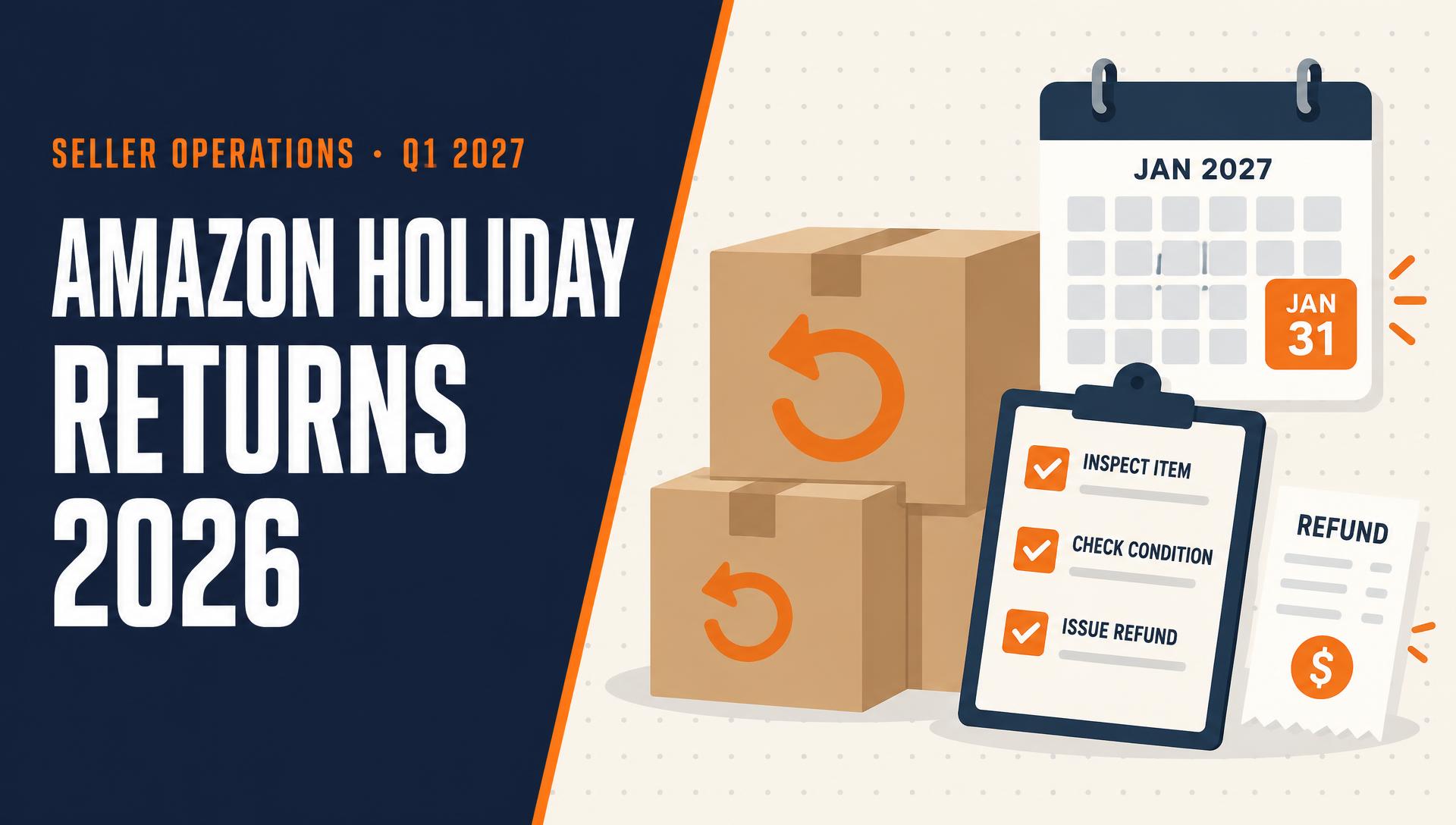
Most items bought on Amazon.com between November 1 and December 31, 2026 can be returned until January 31, 2027, so some Black Friday revenue will come back in January. Plan cash flow and check returned-unit grading.
Wait for advertising attribution windows and returns before judging the event. Compare contribution margin, new-to-brand customers and stock outcomes, not just sales.