1. What does Amazon DTC mean?
A DTC (direct-to-consumer) brand makes its own products and sells them straight to shoppers, usually through its own website and social channels, instead of through wholesalers and retail chains. Amazon's own seller education site describes a DTC brand as one that controls the customer journey from production to delivery.
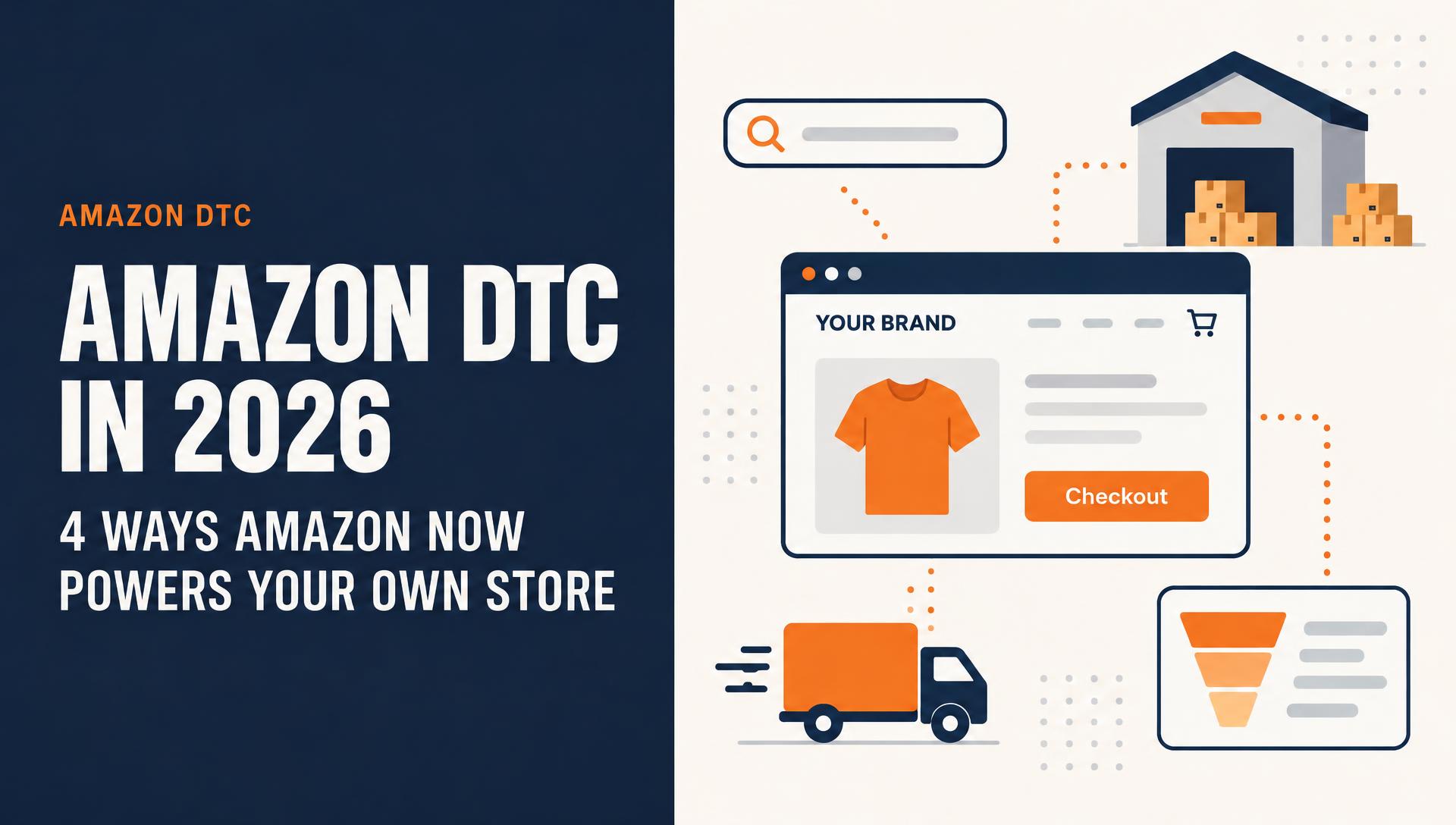
People searching for 'Amazon DTC' usually mean one of two things. Some want to know how a DTC brand should sell on Amazon without damaging its website business. Others want to know how Amazon's services, such as fulfillment and Prime delivery, can power their own store. In 2026 both are real choices, because Amazon has spent the year opening its logistics, checkout and search to brands' own websites.
The useful way to think about it: Amazon is now a set of separate tools, and a DTC brand can pick the ones that fit. You do not have to choose between 'Amazon' and 'DTC'.
2. The four Amazon DTC options compared
The table below summarizes the four options from Amazon's own program pages and announcements. Fees and terms change, so confirm them in each program before you commit.
| Sell on Amazon (FBA) | MCF with Prime delivery | Buy with Prime | Shop Direct | |
|---|---|---|---|---|
| Where the sale happens | Amazon's store | Your website and checkout | Your website, with Amazon's checkout option | Your website (or Buy for Me on eligible items) |
| Who fulfills | Amazon | Amazon, from your FBA/MCF inventory | Amazon | You |
| Main costs | Referral, FBA and storage fees, plus ads | Per-unit MCF fees; Prime option at no additional cost | 3% Prime service fee per order, fulfillment and payment fees | No participation fee, according to Amazon |
| Customer data | Amazon owns the customer relationship | You keep the customer | Customer emails and order data shared with you | Order arrives in your store |
| Returns and service | Amazon for FBA orders | You keep your own process | Amazon support options available | You |
| Availability | Every marketplace you register in | US merchants | US | US shoppers |
3. Option 1: Sell on Amazon as a DTC brand
This is the classic route. You list in Amazon's store through Seller Central, protect your brand with Brand Registry, ship inventory to FBA so products are Prime-eligible, and use Sponsored Products, Sponsored Brands and other Amazon Ads to win search demand. You get access to shoppers who start their search on Amazon, and you pay referral and fulfillment fees in exchange.
The risk for DTC brands is margin and channel conflict. A product priced for a website with free shipping thresholds and email-driven repeat orders may not survive Amazon's fees and advertising costs. Start with the products that already have search demand on Amazon and enough margin after fees, rather than listing the whole catalog on day one.
4. Option 2: Multichannel Fulfillment with Prime delivery on your website
Multichannel Fulfillment (MCF) lets Amazon pick, pack and ship orders that come from other channels, such as your own website, other marketplaces or social shops, using inventory stored in Amazon's network. On September 24, 2026, Amazon announced that new and existing MCF merchants selling in the US can add fast, free Prime delivery as a shipping option on their own websites at no additional cost, while keeping their existing returns and customer service. Amazon said that among early adopters, more than 40% of eligible orders on average shipped with Prime delivery.
This is the biggest Amazon DTC change of the year, because it gives a brand the Prime delivery promise without moving its checkout to Amazon. Business Insider had reported an earlier pilot in March 2026 in which shoppers could get Prime shipping on other websites without logging in to an Amazon account.
Check the fee detail carefully. Amazon's September announcement said the MCF Preferred Pricing Program can save merchants 15 to 25% on fulfillment fees. Amazon's current MCF pricing page describes Preferred Pricing as up to 15% off plus up to $1 in FBA credit per MCF unit, alongside other discounts such as 25% off the first 100 units for new MCF sellers. During the holiday peak from October 15, 2026 to January 14, 2027, a single small standard unit of 4 oz or less costs $7.53 at standard speed, and a 3.5% fuel and logistics surcharge applies to US MCF fees. Amazon says updated MCF fees take effect on January 15, 2027.
- Good fit: brands that already use FBA and want one inventory pool for Amazon and website orders.
- Good fit: brands whose website conversion suffers from slow or paid shipping.
- Watch: website orders and Amazon orders draw on the same stock, so a website promotion can cause an Amazon stockout during peak weeks.
- Watch: you still own customer service and returns for website orders.
5. Option 3: Buy with Prime
Buy with Prime lets you show the Prime logo and delivery promise on eligible products on your website, with a checkout that uses the payment and shipping details saved in the shopper's Amazon account. It can also display ratings and reviews from Amazon.com on your site, and Amazon shares customer emails and order information so you can run your own marketing.
Pricing is pay as you go. Amazon lists three main fees: a Prime service fee of 3% per order with a $0.30 minimum, a per-unit fulfillment fee, and payment processing fees. A 2026 peak rate card applies from October 15, 2026 to January 14, 2027, and a 3.5% fuel and logistics surcharge also applies. Amazon reports conversion and revenue-per-visitor lifts from its own merchant testing; treat those as Amazon's figures and test on your own traffic.
The practical difference from Option 2: Buy with Prime adds Amazon's checkout and reviews to your site, while MCF with Prime delivery keeps your own checkout and simply adds Prime delivery as a shipping option.
6. Option 4: Shop Direct
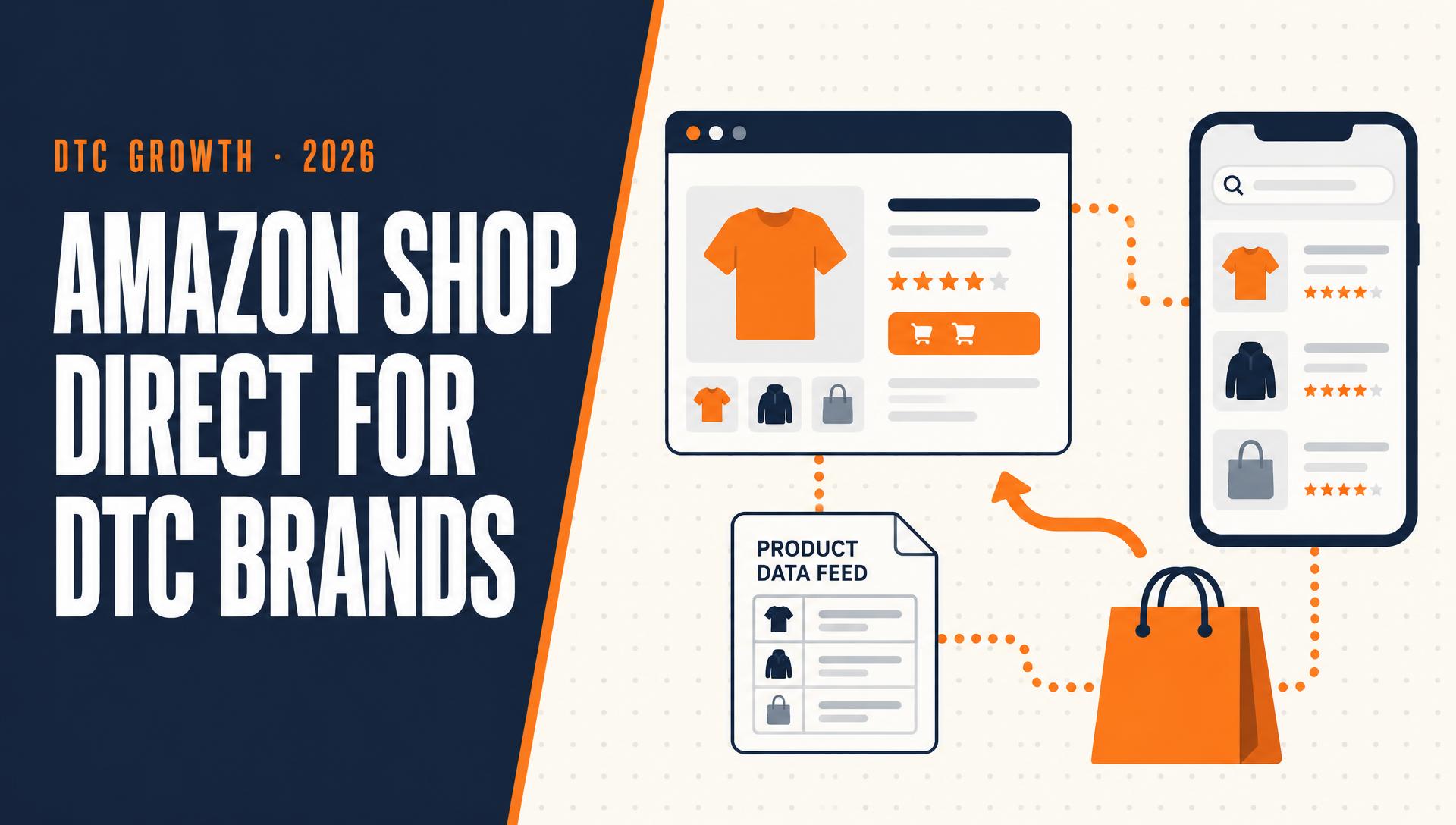
Shop Direct works the other way round. Instead of bringing Amazon to your website, it brings your website's products into Amazon. Products from your store can appear in Amazon's US search results and in Alexa for Shopping with a 'Shop Direct' label, and shoppers click through to buy on your site. On November 4, 2026 Amazon launched a free self-service Merchant Workspace to join, and says there are no fees to participate.
Shop Direct suits brands that do not want to hold inventory at Amazon but want to be found when shoppers look for them there. Feed quality decides how products appear, so titles, identifiers, prices and stock must be accurate.
7. How to choose the right Amazon DTC setup
Start from your problem, not from the program. Each option fixes a different weakness.
| Your main problem | Option to test first | What to measure |
|---|---|---|
| Shoppers search for your products on Amazon and buy from competitors | Sell on Amazon with Brand Registry and Sponsored Ads | Branded search share, contribution margin after fees and ads |
| Website visitors abandon carts at shipping | MCF with Prime delivery or Buy with Prime | Checkout conversion, delivery cost per order |
| You want Amazon visibility without Amazon inventory | Shop Direct | Incremental new customers from Shop Direct traffic |
| Your own 3PL struggles at peak | MCF for website orders | On-time delivery, cost per unit at peak vs off-peak |
8. Avoiding channel conflict between Amazon and your website
- Keep prices consistent. Alexa for Shopping can show shoppers up to a year of price history for items in Amazon's store, and large gaps between your site and Amazon confuse customers.
- Decide which products go where. Hero products can sell on both; bundles, subscriptions and limited editions often work better on your website.
- Protect stock. If MCF fulfills both channels, set a reserve for Amazon during events so a website promotion does not end your Prime eligibility on Amazon.
- Use the same product content. Titles, images and claims should match across channels so reviews and questions apply to the same product.
- Track new customers, not only revenue. A channel that only moves existing customers from one checkout to another is not growth.
9. How to measure Amazon DTC results
Treat Amazon and your website as one funnel. Label traffic from each Amazon program in your analytics before launch, compare conversion rate, average order value, returns and repeat purchase rate after 30 and 90 days, and read Amazon sales and website sales side by side. Amazon Attribution can help measure how off-Amazon marketing drives Amazon sales for eligible brands.
10. An Amazon DTC readiness checklist
- List your products by margin after Amazon fees and decide which ones belong on Amazon.
- Register your brand and lock down listing content before you scale ads.
- Price MCF and Buy with Prime orders using the current rate card, including peak fees and the fuel surcharge.
- Test your website checkout with the Prime delivery or Buy with Prime option on a small set of products first.
- Audit your product feed before joining Shop Direct.
- Set stock reserves for Amazon events if both channels share inventory.
- Review results after 90 days and keep only the options that add new customers at a healthy margin.