1. Amazon holiday return dates for 2026, by marketplace
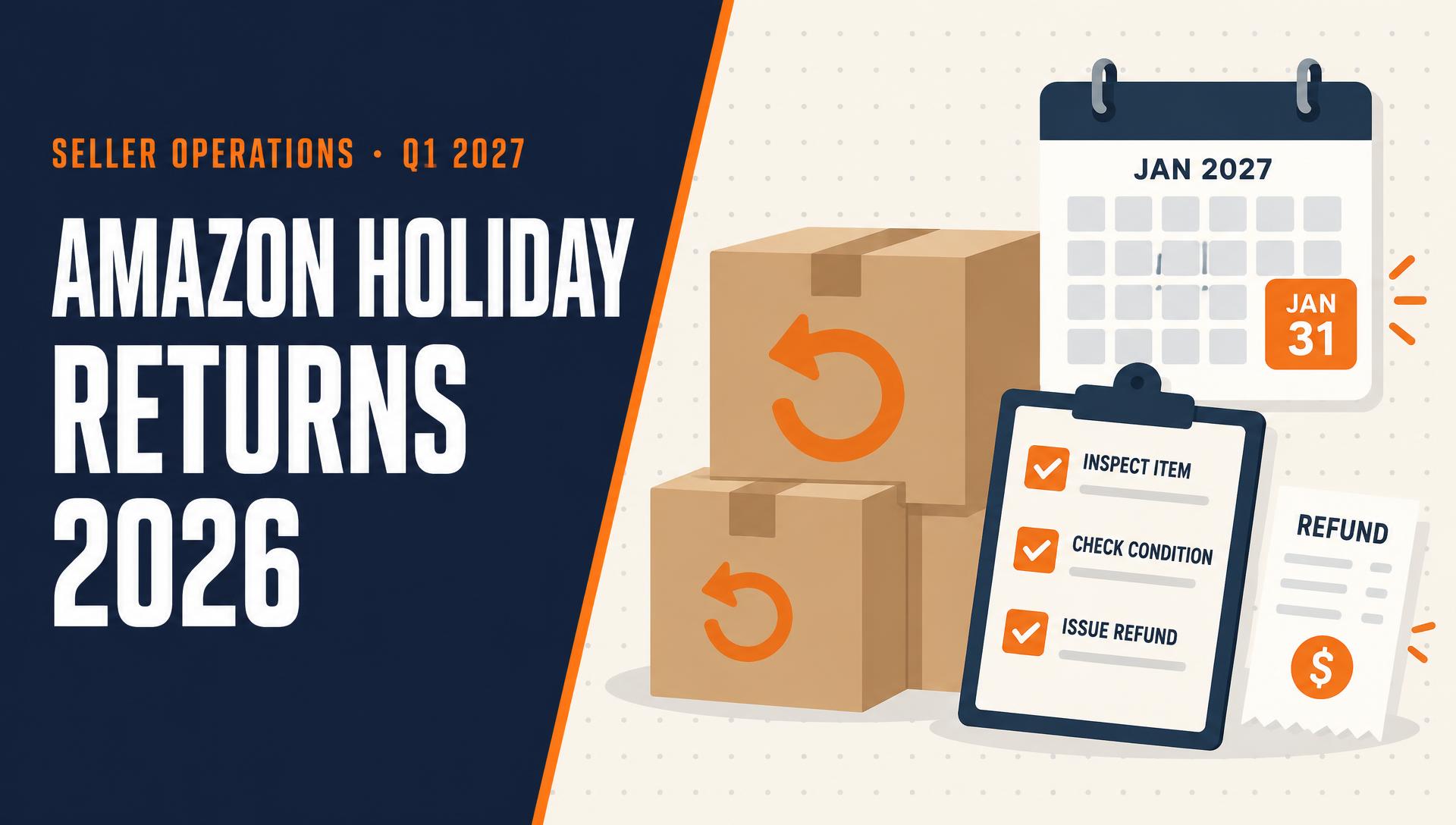
Amazon extends its standard 30-day return window every holiday season so gifts can be returned after the holidays. For 2026 the end date is the same in the US, the UK and most European stores: January 31, 2027. What differs is the purchase window and a few category exceptions.
| Marketplace | Bought between | Returnable until | Source |
|---|---|---|---|
| United States (Amazon.com) | November 1 to December 31, 2026 | January 31, 2027 (Apple products: January 15, 2027) | Amazon Seller Forums |
| United Kingdom (Amazon.co.uk) | November 1 to December 25, 2026 | January 31, 2027, or 30 days from receipt if later | Amazon.co.uk help |
| Ireland, Belgium, France, Germany, Italy, Netherlands, Poland, Sweden | November 1 to December 25, 2026 | January 31, 2027, or delivery plus 30 days if later | Truebooks summary of Amazon's notice |
| Spain | November 1, 2026 to January 6, 2027 | February 6, 2027, or delivery plus 30 days if later | Truebooks summary of Amazon's notice |
| Certain categories in Germany, Italy and France | Within the holiday window | January 15, 2027, or delivery plus 14 days if later | Truebooks summary of Amazon's notice |
2. What the extended window changes and what it does not
Amazon's notice to US sellers says the extended window applies automatically to every item sold on Amazon.com, through FBA or FBM, and that existing return and refund conditions remain unchanged. You do not need to opt in, and you cannot opt out.
The window changes timing, not eligibility. A gift bought on November 20 that would normally have to come back by late December can now come back at the end of January. Categories that are normally non-returnable stay non-returnable, and condition rules still apply. FBM sellers should make sure their return address, return settings and prepaid label options are correct before December, because those returns come to you.
The European dates sit on top of consumers' statutory rights. Amazon.co.uk notes that UK shoppers can cancel most purchases within 14 days of receipt, and Amazon's voluntary 30-day policy and holiday extension are in addition to that.
3. Why January cash flow takes the hit
The sales happen in November and December, but a share of the refunds arrives in January. On a quiet January marketplace, refunds can outweigh new sales and leave a settlement that is small or even negative.
A simple illustration with our own example figures: a seller takes $120,000 in holiday sales with a typical 6% return rate, so about $7,200 is refunded. If half of those refunds arrive after December 31, January absorbs $3,600 of refunds on top of normal January returns, while January sales may be a fraction of December's. Build that into your cash plan and your inventory orders.
- Hold back a returns reserve from December payouts based on your own return rate by category, not an average.
- With a December 31 year end, discuss a returns provision with your accountant so holiday profit is not overstated.
- UK and EU sellers: VAT on a refund is normally adjusted in the period the refund is made, so January returns can affect the next VAT return. Confirm with your accountant.
- Do not judge December advertising on gross sales alone; recheck ACoS and TACoS after January returns.
4. FBA returns: set up Customized grading before the wave
When an FBA return arrives, Amazon decides whether the unit can be sold again as new. In October 2026, Amazon told US sellers they can now set their own grading criteria with a feature called Customized grading, found under Settings, then Orders, then Recovery in Seller Central. Amazon uses your criteria as guidance alongside its standard grading and programs such as FBA Grade and Resell.
Trade coverage of the announcement describes rules for seal and packaging type, included accessories, authenticity indicators and device functions, applied to your whole catalog, a pasted list of ASINs or a CSV upload. ASINs without a rule keep Amazon's default grading. For products where an opened polybag or missing insert routinely turns a good unit into unsellable stock, setting rules before January is one of the cheapest margin wins of the season.
- Start with your 10 most-returned ASINs and define what 'sellable as new' means for each.
- If you use Grade and Resell, review the used-condition price percentages before the returns arrive.
- Decide in advance which unsellable units to remove, liquidate or dispose of, so they do not accrue storage fees.
5. Refunded but not returned: reconcile and claim
The longer the return window, the longer the gap between a refund and the physical return. Amazon's FBA inventory reimbursement policy has a dedicated section on customer return claims, covering refunds where the item did not come back, came back as a different item or was damaged in Amazon's care. Eligibility rules and time limits are set out on that help page and can change, so check them before you file.
Run a reconciliation in February and again in March: match every refund in the holiday period with a return received, a replacement or a reimbursement. Missing units are money, and the extended window means many cases will only become claimable well into Q1.
6. Returns processing fees and return rates
In the US, FBA charges returns processing fees on Apparel and Shoes and on products whose return rate exceeds the threshold for their category. Amazon's 2027 fee update also moves Apparel and Shoes returns processing fees to new tiers from January 15, 2027. Check the returns processing fee page in Seller Central for current thresholds and how the measurement period is calculated before you assume holiday returns are free.
High holiday return rates also feed into listing quality signals. Product returns with reasons such as 'not as described' or 'wrong size' point to listing problems you can fix.
7. Cut returns before they happen
The cheapest return is the one that never happens. Use the return reasons and customer comments in Seller Central, including the Voice of the Customer dashboard, to find the listings that cause avoidable returns, then fix them before peak gifting weeks.
- Sizing and fit: add size charts, measurements in both inches and centimetres, and fit notes to images and bullets.
- Compatibility: list exactly which models, devices or refills a product fits, and which it does not.
- Expectations: show true scale and colour in images, and state what is and is not in the box.
- Questions: answer common questions directly in bullets and A+ Content, because Alexa for Shopping summarizes product pages and reviews for shoppers.
- Packaging: fix damage-related returns with better inserts or outer packaging.
8. Q1 2027: returns, fees and inventory in the same weeks
January 2027 is busy for sellers in the US and Canada. Holiday peak FBA fees end on January 14, new FBA fulfillment rates start on January 15, and from February 1 Amazon moves to a single age-based storage rate and a new 28-day test for the low-inventory-level fee. Returned units re-enter your stock in the same weeks, so recount available inventory before placing Q1 orders.
Amazon has also started showing estimated lead times for new US FBA shipments on the Manage Shipments page, rolling out from November 2026. According to the FBA team's email reported by PPC Land, a shipment that takes five days in January may take 12 during the holiday season. Use the estimates to time restocks after the returns are graded rather than shipping in December on guesswork.
9. Holiday returns checklist for sellers
- Before December 1: confirm FBM return settings and address; set Customized grading rules for top-returned ASINs.
- December: hold a returns reserve from payouts; fix listing causes of returns on best sellers.
- January 1 to 31: monitor daily refunds against forecast; avoid large new inventory orders until return volumes are clear.
- January 15 and February 1: review fee changes and aged inventory before reordering.
- February and March: reconcile refunds against returned units and file eligible reimbursement claims.
- March: compare holiday return rates by ASIN with the rest of the year and update listings, packaging or product choices.