What Amazon Haul actually is
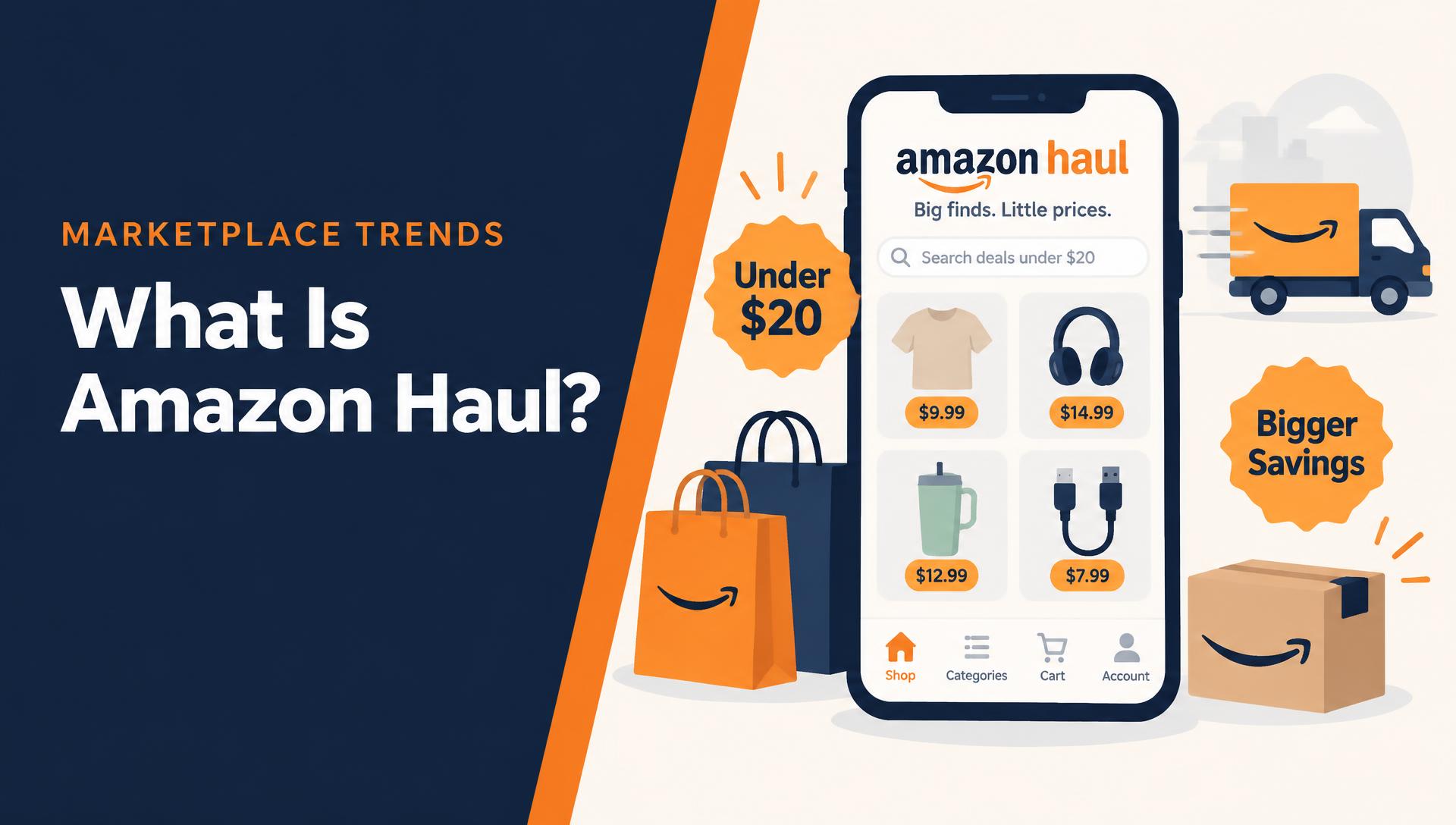
Amazon Haul is a dedicated storefront inside the Amazon shopping app and website focused on very low prices. Amazon introduced it in beta in the United States in November 2024, describing it as a place for items mostly under $20, with many under $10 and some as low as $1. It has its own search, cart, and checkout, separate from the main Amazon shopping experience.
The trade-off for those prices is speed: Haul orders typically arrive in one to two weeks rather than the one to two days Prime members expect. Products ship directly from sellers, largely manufacturers, which removes the warehousing cost that fast delivery requires.
- Price focus: most items under $20, many under $10
- Separate experience: its own search, cart, and checkout inside Amazon
- Slower delivery: roughly one to two weeks instead of Prime speed
- Direct fulfillment: products ship from sellers rather than Amazon warehouses
Why Amazon built it
Haul is Amazon's answer to the rapid growth of ultra-low-price marketplaces, most visibly Temu and Shein, which attracted price-sensitive shoppers with factory-direct goods and slow-but-cheap shipping. Rather than letting that segment leave the platform, Amazon built a lane for it inside its own app.
For sellers, the strategic signal matters more than the feature itself. Amazon is formally splitting demand into two behaviors: shoppers who pay for speed, quality, and brand trust, and shoppers who optimize purely for price. Those two groups increasingly see different shelves.
How Haul differs from the main marketplace
The differences go beyond price. Delivery expectations, fulfillment economics, and buyer intent all change inside Haul, which means the playbook that wins on the main marketplace does not transfer directly.
| Dimension | Main Amazon marketplace | Amazon Haul |
|---|---|---|
| Price band | Full range, including premium | Mostly under $20 |
| Delivery | Fast, often 1-2 days with Prime | Roughly 1-2 weeks |
| Fulfillment | FBA and fast shipping options | Direct-from-seller, slower shipping |
| Buyer intent | Convenience, quality, brand trust | Lowest price, discovery, impulse buys |
| Competition basis | Reviews, brand, content, ads | Price above almost everything |
What it means for established sellers
If you sell premium or mid-price products, Haul does not put your listings head-to-head with $5 alternatives; it segments the buyers who were never going to pay your price anyway. The real risk is indirect: categories where the only differentiator was already price will feel the most pressure, because Haul trains shoppers to expect lower prices everywhere.
The sellers most exposed are those competing on price alone with undifferentiated products. The sellers best protected are those with genuine differentiation: better materials, real brand equity, strong review profiles, and content that communicates why the product costs more.
- Price-only competitors face the most pressure from Haul-style expectations
- Differentiated brands are insulated by quality, reviews, and trust
- Consumables and impulse categories feel Haul's influence first
- Premium positioning becomes more valuable, not less, as the market splits
How to respond without racing to the bottom
The worst response to ultra-low-price competition is matching it. You cannot out-discount a factory-direct seller on a commodity item, and trying destroys the margin that funds your ads, content, and product quality. The productive response is to strengthen the things Haul sellers cannot copy quickly.
That means investing in listing quality and A+ Content that explains your value, building review velocity through legitimate programs, using advertising to defend branded search terms, and pricing for contribution margin rather than for the vanity of a lower number.
- Audit your listings: does your content explain why the product is worth its price?
- Defend branded search with Sponsored Brands so bargain hunters still see your story
- Protect margin: know your floor price before any promotion, and never cross it
- Watch your category: if Haul-style pricing enters your niche, differentiate faster
The outlook for 2026 and beyond
Amazon continues to expand Haul's selection and visibility, and the broader pattern is clear: marketplaces are segmenting shoppers by price sensitivity. Expect more separation between the convenience-and-trust shelf and the lowest-price shelf, not less.
For brands, the durable strategy is unchanged: own a position that is defensible on quality and trust, measure profitability honestly, and treat ultra-low-price channels as a distinct segment to understand rather than a war to win. If you are unsure how exposed your catalog is, an account review against these trends is a sensible next step.