What is an Amazon brand agency?
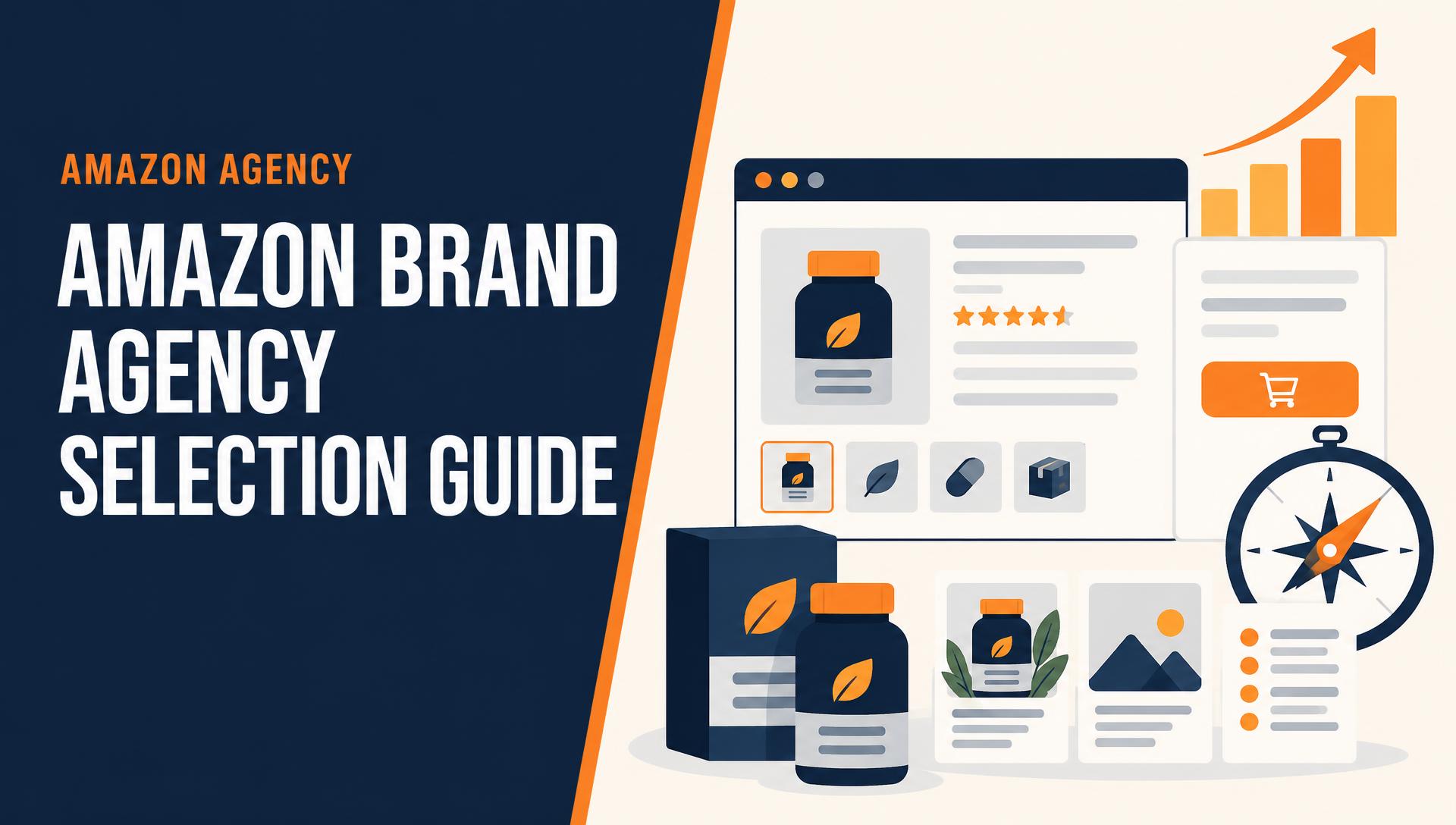
An Amazon brand agency is a specialist partner that helps a brand operate and grow across the Amazon marketplace. Unlike a general digital agency, it works inside the systems that are unique to Amazon: Seller Central or Vendor Central, Brand Registry, catalogue relationships, retail readiness, Amazon Ads, FBA inventory, promotions, reviews, and marketplace policy.
The word brand matters. A complete partner does more than lower ACOS. It connects the shopper's search, the product detail page, the offer, the inventory position, and the advertising plan. If the listing does not convert or the product is about to run out of stock, buying more traffic is not growth.
What should an Amazon brand agency actually do?
Scope varies widely, so compare deliverables rather than labels. A full-service Amazon marketing agency will normally cover most of the following areas, while a specialist may handle only one.
| Workstream | Typical deliverables | Business question |
|---|---|---|
| Strategy | Market sizing, competitor review, goals, catalogue plan | Where can the brand win profitably? |
| Listings | Keyword research, copy, images, A+ Content, testing | Will qualified traffic convert? |
| Advertising | Sponsored Products, Brands, Display, budgets, bids | Which demand should the brand buy? |
| Operations | Inventory forecasts, case management, Buy Box monitoring | Can the account fulfil the growth plan? |
| Brand | Brand Store, Registry support, positioning, creative system | Does Amazon represent the brand consistently? |
| Reporting | Sales, margin, TACoS, organic rank, inventory risks | Is marketplace growth creating profit? |
Agency vs freelancer vs in-house team
The best operating model depends on catalogue complexity, growth stage, and how many capabilities are already inside the company. There is no universal winner.
| Model | Best fit | Main trade-off |
|---|---|---|
| Freelancer | A narrow task or a small, stable catalogue | Lower cost, but limited coverage and backup |
| In-house hire | A mature brand needing daily internal ownership | Deep brand knowledge, but one hire rarely covers ads, creative, and operations |
| Amazon brand agency | Brands needing several specialist skills at once | Broader team, but scope and communication must be managed carefully |
| Hybrid | Brands with a strong ecommerce lead who needs execution support | Clear decision rights are essential |
How much does an Amazon brand management agency charge?
Fees generally use one of four structures: a fixed monthly retainer, a percentage of ad spend, a percentage of marketplace sales, or a hybrid with a base fee plus performance component. Exact pricing depends on catalogue size, marketplaces, revenue, creative needs, and operational complexity.
Do not compare the headline fee without comparing scope. A lower retainer that excludes listing creative, Store updates, forecasting, or case management may cost more once each item is purchased separately. Percentage-only models also need safeguards so the agency is not rewarded for increasing spend or revenue without protecting margin.
- Ask for a written list of included and excluded deliverables
- Confirm whether creative production and software charges are separate
- Define the notice period, minimum term, and any setup fee
- Keep ownership of the ad account, Brand Store, creative files, and reporting data
- Agree which profit metric prevents revenue growth from hiding weaker economics
How to choose the right Amazon brand agency
A strong selection process tests the agency's diagnosis, not its sales deck. Give shortlisted teams the same business context and ask what they would investigate first. Good answers identify dependencies; weak answers jump directly to higher bids, more campaigns, or a complete listing rewrite without evidence.
- Relevant experience: ask for work with a similar business model, price point, and catalogue—not merely the same category
- Named team: meet the strategist or account lead who will actually manage the work
- Commercial thinking: require discussion of margin, stock, fees, promotions, and returns alongside sales and ACOS
- Operating cadence: define meeting frequency, response times, approvals, and escalation paths
- Transparent reporting: insist on access to source accounts and a consistent scorecard
- Clear first 90 days: expect an audit, prioritised roadmap, baseline, and realistic sequence of work
The metrics an Amazon agency should report
ACOS is useful, but it answers only how much ad spend was required for attributed ad sales. It does not show whether total sales grew, whether organic rank improved, or whether the account generated contribution profit.
| Metric | What it reveals | Why it matters |
|---|---|---|
| Contribution profit | Revenue left after product, Amazon, fulfilment, and ad costs | The clearest commercial outcome |
| TACoS | Ad spend as a share of total sales | Whether paid growth supports organic demand |
| Conversion rate | Orders divided by detail-page visits | Listing and offer quality |
| Organic rank | Visibility without paying for every click | Durability of growth |
| In-stock rate | Availability across priority ASINs | Whether demand can turn into revenue |
| New-to-brand | Orders from shoppers new to the brand | Acquisition rather than repeat capture |
Seven red flags to avoid
- Guaranteed rankings, revenue, or a fixed ROAS before reviewing the account
- A strategy based only on increasing ad spend
- No access to the people doing the day-to-day work
- Reporting that shows sales but hides fees, margin, stockouts, or returns
- Long contracts without defined deliverables or a practical exit process
- The agency owns the advertising account, creative source files, or Brand Store assets
- Case studies with impressive percentages but no starting point, timeframe, or explanation of the work
Questions to ask before signing
- What would you audit in the first 30 days, and why?
- Who will manage our account, and how many other brands do they manage?
- Which tasks are included each month, and which require a separate quote?
- How do you connect advertising decisions to margin and inventory?
- What access will we retain to accounts, data, and creative files?
- How do you handle policy issues, suppressed listings, and urgent stock risks?
- What would make you recommend reducing our ad spend?
- How will success be measured after 30, 60, and 90 days?