Managing 21 Brand Accounts Profitably Through Amazon 3P Marketing Strategy & Brand Control
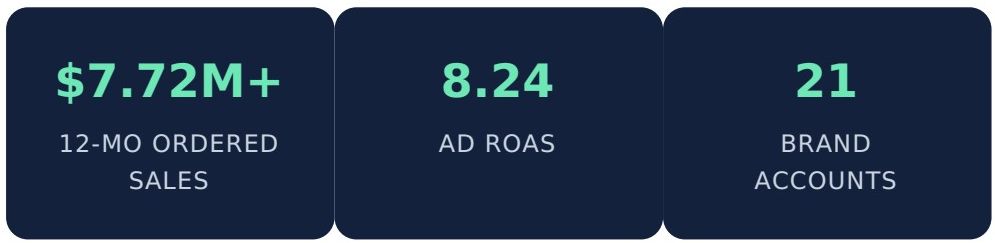
A multi-brand Amazon 3P seller scaled to $7.72M+ in annual revenue by consolidating Brand Registry control, Amazon PPC, retention, and profit-recovery operations across a 21-brand portfolio.
Client Background
An experienced Amazon 3P seller operating as an authorized brand partner, managing 21 brand accounts with Brand Registry access across multiple categories.
As the designated Brand Registry administrator, the client held full control over catalogs, advertising execution, and brand protection - but scaling to 21 accounts introduced significant operational complexity across margins, repeat cycles, and inventory constraints.
The seller partnered with Xrowlix to implement a structured Amazon 3P Brand Management framework designed to improve AOV, repeat orders, profitability, and operational control across the entire portfolio.
What was holding growth back
Brand Onboarding Inefficiency
Standard outreach didn't communicate a differentiated growth story around PPC efficiency, brand control, MAP enforcement, and margin protection - making it hard to secure long-term 3P partnerships.
Fragmented Amazon Execution
SEO, PPC, pricing, and inventory ran as separate functions across brands, causing inconsistent IPI scores, Buy Box instability, and missed cross-brand leverage.
Declining Margins at Scale
TACoS crept up as revenue grew; low-AOV SKUs without structured bundles or pack sizes made growth increasingly dependent on ad spend.
Weak Repeat Purchase Economics
Growth was driven by first-time buyers, Subscribe & Save adoption stayed low, and there was no structured retargeting of past buyers or detail-page viewers.
Limited AMC & Advertising Depth
Ads were mostly manual keyword targeting - high-ROAS AMC audience segments for retargeting and lifecycle advertising were underutilized.
Buy Box Instability
Unauthorized resellers created pricing conflicts, reduced price control, and leaked PPC traffic to lower-priced offers.
Unrecovered FBA & Inventory Losses
Unclaimed FBA reimbursements, inefficient restocking, inbound placement fees, and long-term storage silently eroded profit month over month.
How Xrowlix engineered the growth system
Repositioned Brand Outreach as an Authorized Partner
Reframed the seller from a wholesale reseller to an authorized Amazon brand partner focused on brand control, listing ownership, and revenue recovery.
Outreach led with Amazon-specific problems brands already recognized - unauthorized sellers, Buy Box loss, price erosion, and broken listings - backed by pre-diagnostic audits.
Unified Catalog, SEO & PPC Execution
Consolidated SEO, PPC, pricing, and inventory into one operating framework across brands so proven strategies could be replicated across catalogs instead of rebuilt per account.
Margin Protection Through Virtual Bundles & Pack Sizes
Introduced Virtual Bundles, multi-packs, and tiered pricing to raise AOV and contribution margins so revenue growth stopped being dependent on higher ad spend.
Lifecycle & Retention Strategy
Used Repeat Purchase Behavior data to identify high-reorder SKUs, then expanded Subscribe & Save with tiered 5–10% discounts.
Applied Lead-In Coupons to convert first-time buyers into subscribers early, and retargeted past one-time purchasers with subscription-led offers.
AMC Audience-Based Advertising
Shifted from keyword-only buying to Amazon Marketing Cloud audiences built on verified purchase behavior, engagement signals, and ad exposure history - targeting shoppers by real intent, not just search terms.
Operational Profit Recovery
18-month rolling FBA reimbursement audits recovered lost, damaged, and destroyed inventory claims.
Restock forecasting held 85%+ in-stock on priority ASINs, protecting Buy Box ownership and organic ranking as spend scaled.
Measurable outcomes across ads, SEO & retention
Amazon Revenue Performance (First 12 Months)
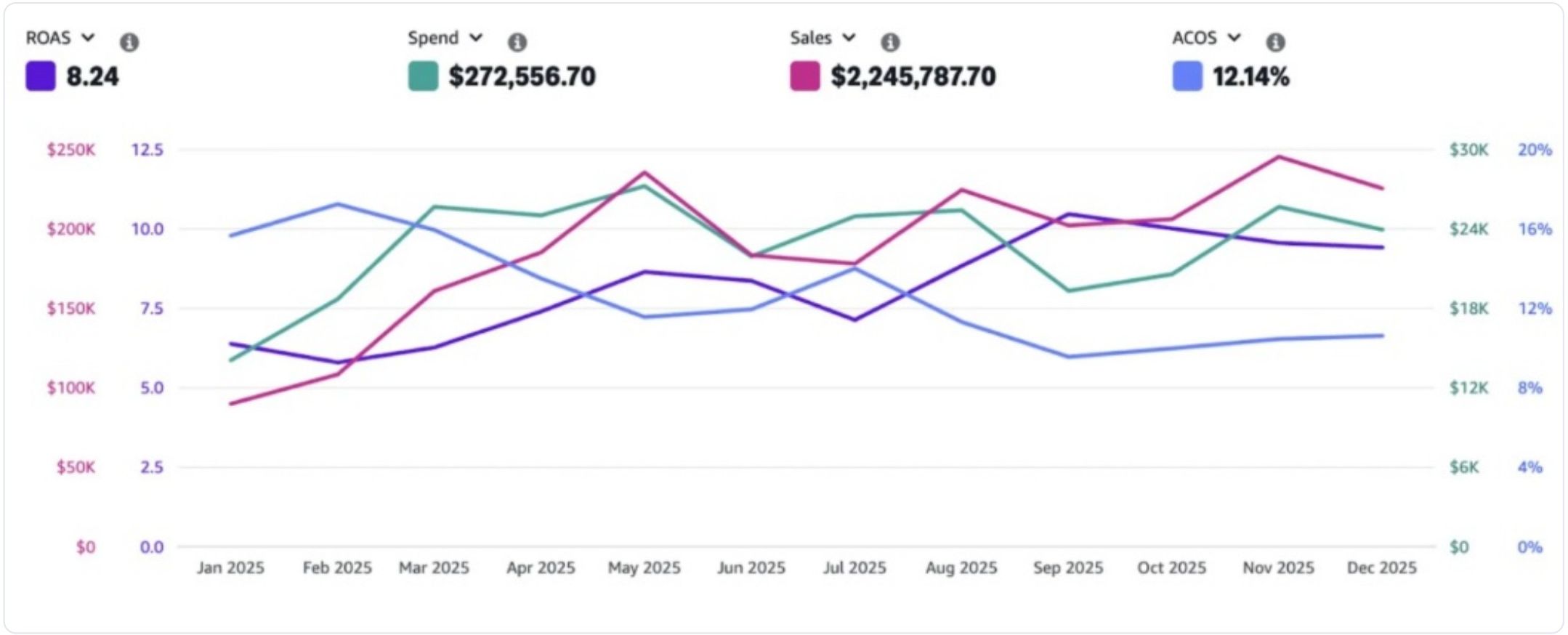
Amazon Advertising Performance (Last 12 Months)
As spend increased, efficiency stayed consistent - proof that ads were driving real demand, not covering up listing or Buy Box problems.
Amazon Marketing Cloud (AMC) Results
Audience-based campaigns added $240K+ in sales by targeting repeat buyers and high-intent shoppers instead of broad keyword traffic.
Subscribe & Save Retention
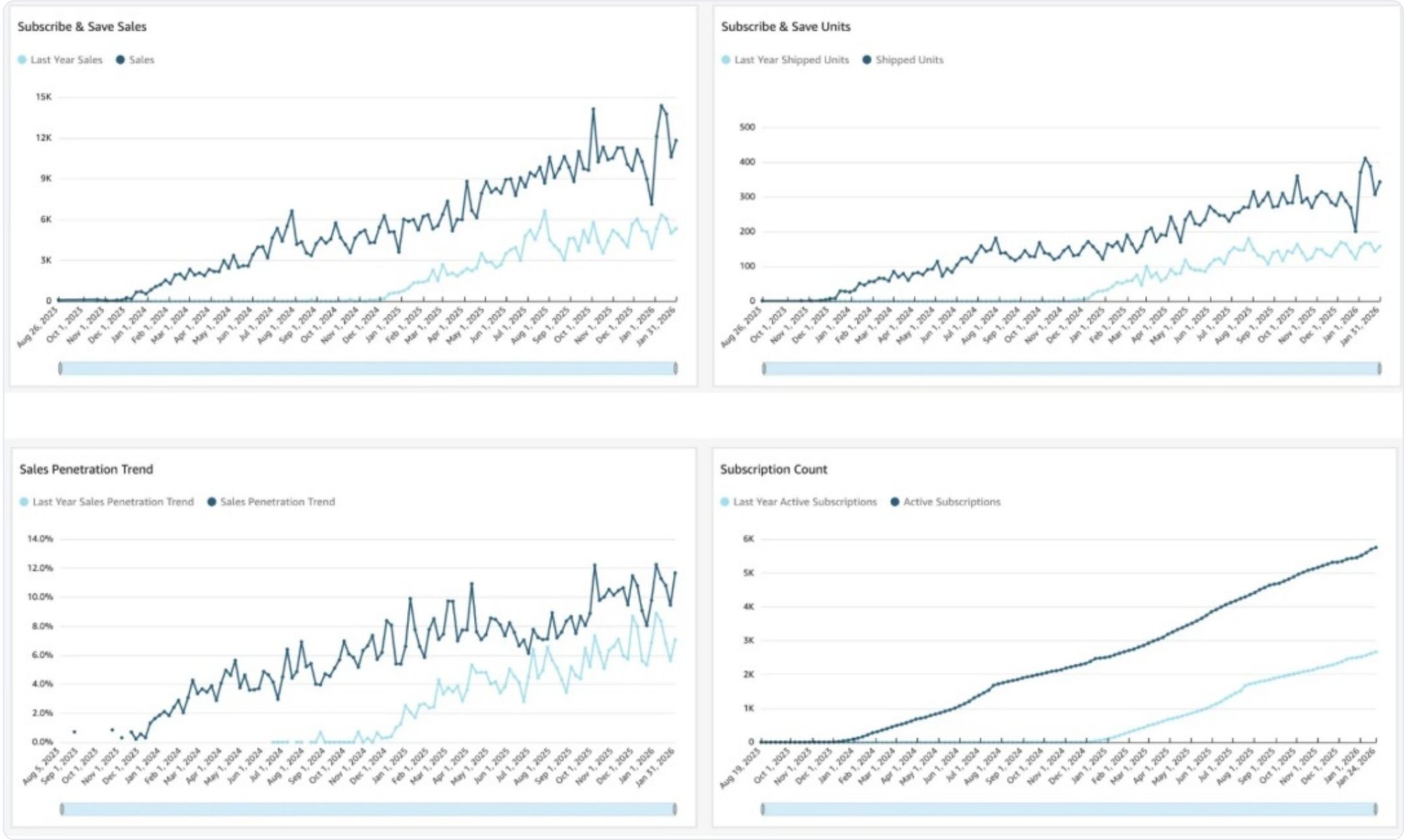
Monthly subscription revenue scaled to $10K–$14K with 300–400+ units shipped per month, penetration rising to ~10–12% of total sales.
FBA Reimbursement Recovery
$151,878.53 recovered across the portfolio in 2025 (avg ~$12.7K/month) - handled in-house without paying 20–25% recovery fees, so 100% of recovered funds flowed back to net profit.
What the engagement delivered
- $7.72M+ portfolio revenue across 240,474 units in 12 months.
- $2.24M ad sales at 12.14% ACOS with efficiency holding as spend scaled.
- AMC audience targeting added $240K+ in incremental sales.
- S&S scaled to 5,000+ active subscriptions at 10–12% sales penetration.
- $151,878.53 recovered through in-house FBA reimbursement audits.
More results


Want results like these?
Book a free consultation and we'll show you what's possible for your Amazon business.