What each format actually does
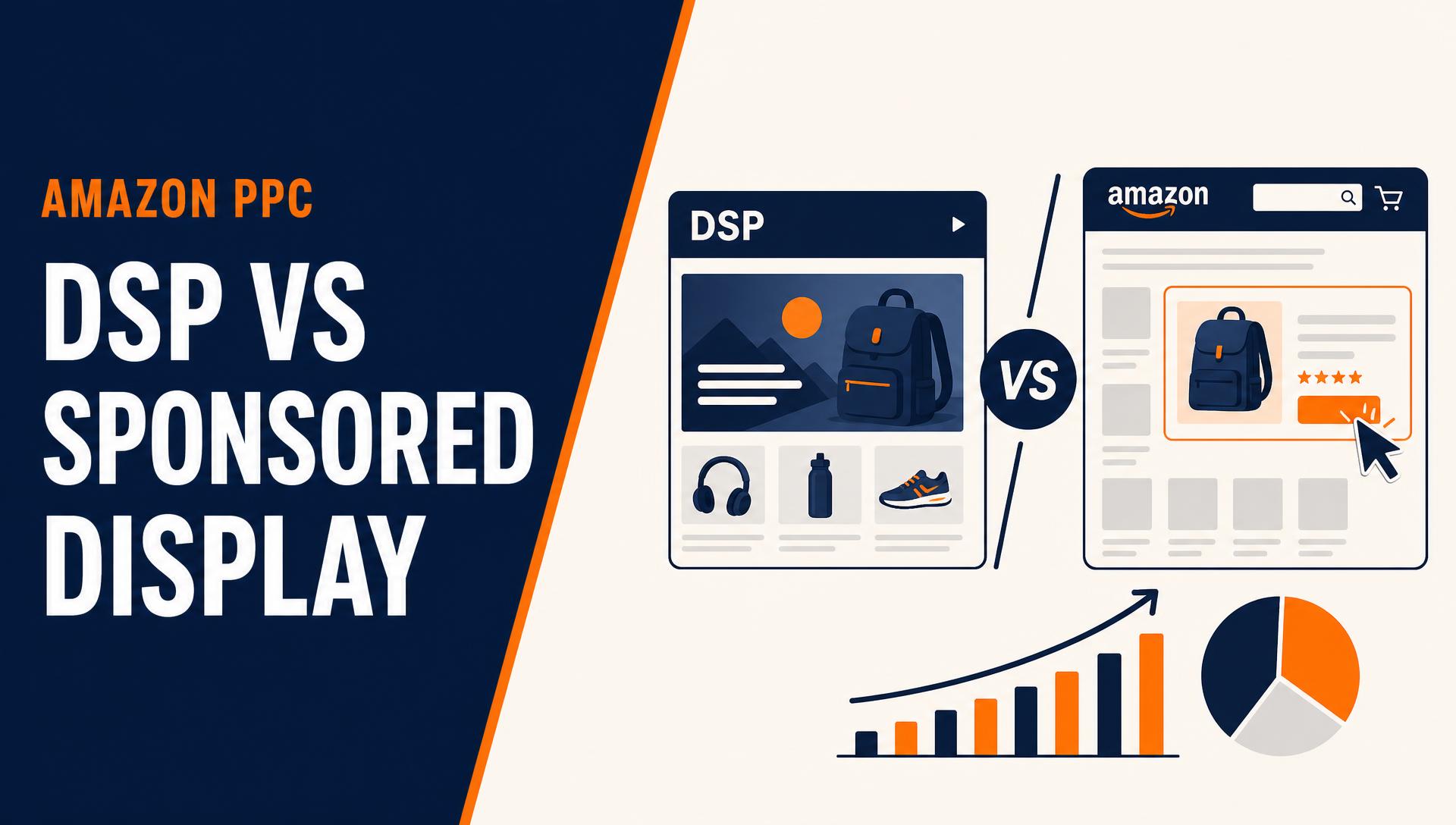
Sponsored Display sits inside the same console as your search campaigns. It buys placements on product detail pages, in search results, and across a limited set of off-Amazon placements, using views-based retargeting, purchase-based audiences, and product or category targeting.
Amazon DSP is a full programmatic buying platform. It reaches Amazon-owned inventory, third-party exchanges, streaming TV, and audio, with audience building from Amazon shopping signals that the self-serve console does not expose. The trade-off is complexity and cost of entry, not capability.
| Dimension | Sponsored Display | Amazon DSP |
|---|---|---|
| Practical budget floor | None | Roughly $30k to $50k per month |
| Setup time | Minutes | Days, often with managed service |
| Audience depth | Preset views and purchase audiences | Custom segments, lookalikes, lifestyle and in-market |
| Inventory | Amazon pages plus limited off-site | Amazon, third-party exchanges, streaming TV and audio |
| Measurement | Standard ad console reporting | Attribution across view-through, new-to-brand, and reach |
| Best fit | Retargeting, conquesting, defending detail pages | Incremental reach once search is saturated |
The order of operations that protects your margin
The mistake we see most often is a brand adding upper-funnel display before its search campaigns are efficient. Display spend does not fix a listing that converts poorly or a keyword structure that wastes budget on unqualified traffic. It amplifies both problems at a higher cost per acquisition.
Run the sequence in this order: profitable Sponsored Products coverage on core and competitor terms, then Sponsored Brands and Sponsored Brands Video for mid-funnel, then Sponsored Display retargeting for shoppers who viewed and did not buy, then DSP once the first three are genuinely saturated rather than merely running.
- Search saturated means impression share on your core terms is high and incremental bids stop returning profitable volume
- Retargeting works only when detail-page traffic is meaningful, so it follows traffic rather than creating it
- DSP earns its overhead when catalog depth and repeat purchase behavior give the audience data something to work with
Measurement is the real difference
Sponsored Display reports in the same currency as the rest of your search campaigns, which makes it easy to fold into an existing ACoS and TACoS view. DSP reports on view-through conversions, new-to-brand rate, and reach, which are the right metrics for upper-funnel media but require a different evaluation habit.
Brands that judge DSP on last-click ACoS almost always conclude it does not work. Brands that judge it on new-to-brand volume and blended TACoS over a full purchase cycle usually reach a different conclusion. Choose the measurement frame before you fund the channel, not after the first month of reporting.
Handling retargeting overlap
Running Sponsored Display retargeting and DSP retargeting simultaneously against the same audience wastes budget and inflates frequency. When both are live, split the roles: keep Sponsored Display on detail-page defense and near-term retargeting, and reserve DSP for prospecting, lapsed-purchaser reactivation, and audiences the console cannot build.
Frequency caps matter more than most brands set them to. Uncapped display against a small retargeting pool burns impressions on the same shopper and depresses response for the whole flight.
The practical verdict for 2026
For brands under roughly thirty thousand dollars a month in total Amazon ad spend, Sponsored Display is almost always the better next dollar. It captures the same retargeting intent at a fraction of the operational overhead, and the budget stays inside a reporting system the team already understands.
For brands above that level with a broad catalog, real repeat purchase behavior, and a measurement setup that can credit upper-funnel media, DSP unlocks reach that search and Sponsored Display simply cannot buy. The distinction is readiness, not sophistication for its own sake.